

How's your pelvic floor?
+ The Down There Doc weighs in

When I was pregnant, I had pelvic pain in the second and third trimesters.
Some days it hurt so bad I could barely walk. It felt as though I had just gotten off a horse. Separating my legs for any reason — getting into the car, walking up stairs, putting on pants, getting out of bed — was unbearable. For relief, I’d sit on frozen vegetables.
When I brought up this pain with the doctor, she told me it was round ligament pain and that it was “normal.” I didn’t argue. Instead, I turned to Google (as one does) and determined that I was likely dealing with symphysis pubis dysfunction (SPD) or pregnancy-related pelvic girdle pain (PGP).
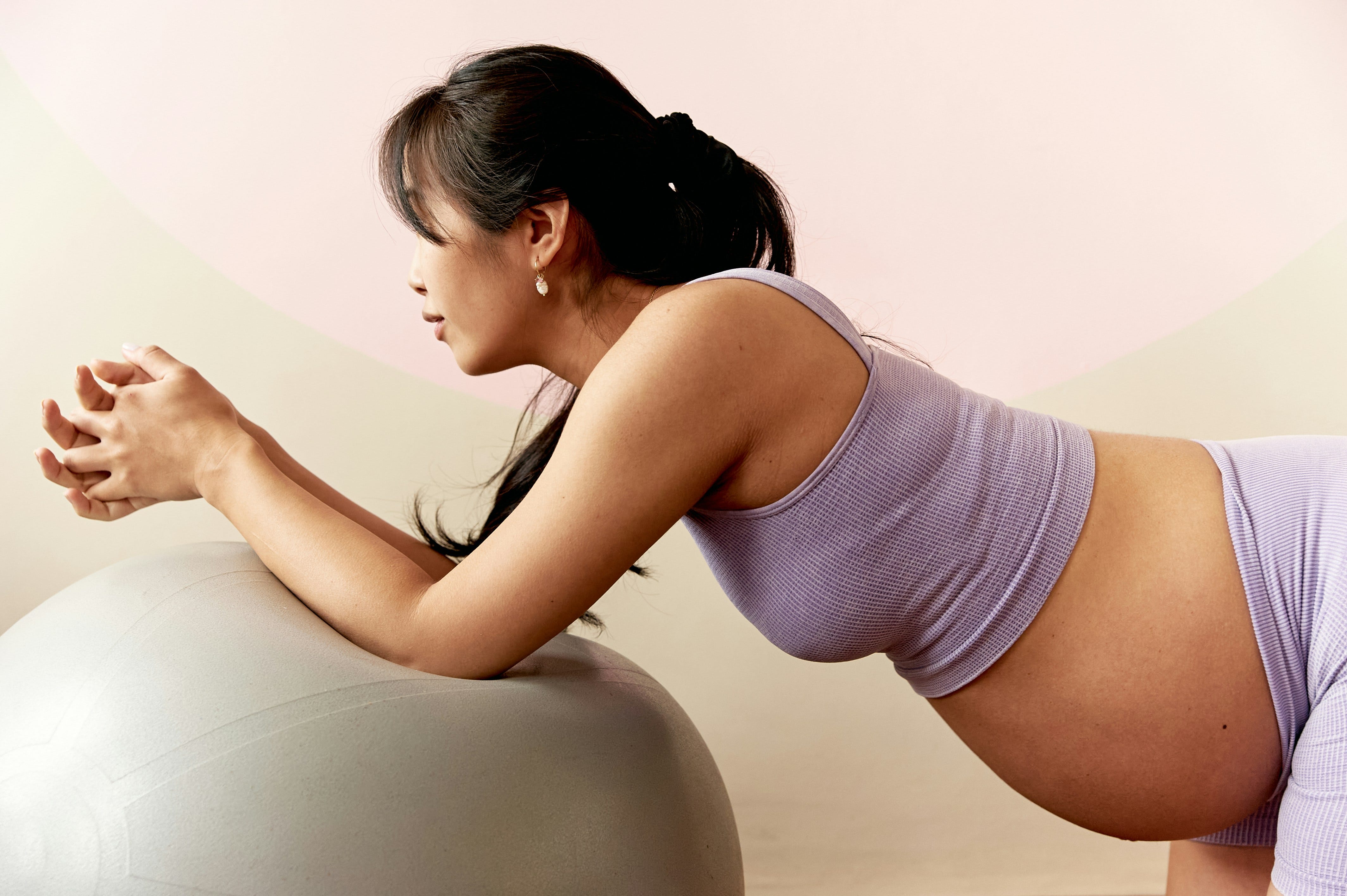
Rather than consult a pelvic floor therapist (which I should’ve done), I followed online recommendations, such as:
Sitting in the car seat before turning both legs
Sitting down while getting dressed
Wearing a belt
Icing
Resting
Wearing supportive shoes
Placing a pillow between my legs while sleeping
Doing exercises to strengthen the pelvic floor muscles
All of this helped, but eventually the pain would return. Stretching (which is often recommended for labor prep) only seemed to make it worse.
In the last few weeks of pregnancy, I felt like like I was going to pee my pants and/or the baby was going to fall right out. The pressure was so significant that I could barely walk around the block. Once, I couldn’t hold it in. As soon as I reached the bathroom, I started peeing. The experience was alarming.
But apparently this is common. Studies show 52% of women (or more) experience urinary incontinence during pregnancy. Those who experience it during pregnancy are also more likely to experience it postpartum.
When I got to my six-week follow-up appointment, the doctor said she “couldn’t even tell I had a baby.” I still felt weak, raw, and unsure of what was happening with my core, but medically, I was fine.
Fine, mind you, is not great.
Three or more weeks after that, I scheduled an assessment with a pelvic floor therapist who told me I had a one-finger ab separation (which could’ve been my normal pre-pregnancy) and my pelvic floor was a little weak.
Lucky for me, the pelvic pain completely disappeared after having a baby (which isn’t the case for some), but every muscle in my body felt weak — not just my pelvic floor, but my arms, legs, calves.

“After you have a baby and you get medically cleared, you still need pelvic floor therapy to rehab the pelvic floor muscles,” Dr. Crouch explained in our one-on-one discussion (detailed below).
Not a single medical professional during the entire nine months of my pregnancy talked to me about the pelvic floor. Even at my follow-up appointments, it wasn’t mentioned.
Everything we do — getting out of bed, breastfeeding, lifting a car seat, doing laundry — is impacted by our pelvic floor. But this is rarely talked about in the traditional medical setting.
Meanwhile, women are returning to their normal activities postpartum without a second thought. Some are avoiding exercise altogether because it’s uncomfortable or painful. Far too many are going through life thinking it’s normal to pee while laughing or sneezing or running.
When I mentioned pelvic floor therapy to my mother, she said, “let me know what you learn.” I’m sure, more than forty years after having her own children, she’s surprised to hear there might actually be a solution (and one that some insurances actually cover!).

The pelvic floor is a group of muscles and ligaments that support the bladder, uterus (womb), bowel, rectum, and anus. It extends across the entire bottom of the pelvis. It plays a critical role in all bodies (including the male body).
A “healthy” or functioning pelvic floor is strong, but not too tight or strained, and can contract, lift, squeeze, and relax. It functions like any other group of muscles.
When it comes to pelvic floor disorders, pelvic floor physical therapy (PFPT) is considered an evidence-based, first-line treatment for pelvic floor disorders. Pelvic floor muscle training (PFMT) is also considered an effective treatment for those experiencing urinary incontinence (which, not surprisingly, effects more women than men).
If you’re experiencing any form of pelvic floor dysfunction, know that you’re not alone. Studies have found that one quarter of women (25%) in the United States have at least one pelvic floor disorder. The good news is that regardless of how old you are, how many children you’ve had, you can improve your condition. Support is out there!


Marcy Crouch, DPT, is a Board Certified Clinical Specialist in Women’s Health Physical Therapy, founder of “The Down There Doc,” and a mother of two.
When she first entered physical therapy school, she thought she was going to do something completely different. Newly married and not yet a mother, she wasn’t sure if physical therapy was the right career path. But then she got to her last section of anatomy – the pelvic floor component – and her professor gave an example of a woman having a significant pelvic floor muscle injury during delivery and the long-term problems that resulted.
“I was completely blindsided,” Dr. Crouch said. “My jaw dropped to the floor.” She didn’t know that you could have a musculoskeletal injury from childbirth – or that so many people were suffering with these issues. Dr. Crouch knew then that this was the area she was destined to work in. “I was flabbergasted and even now, more than a decade later, I’m still trying to change the way we approach this area of care. When I had my own children, I gained an even greater appreciation for the work.”
In our conversation, Dr. Crouch shares details on the industry, why this care should be essential for every birthing person, and what tips she recommends for those going through pregnancy and postpartum.
Q: You’ve been working in pelvic floor therapy for a long time – how has this field of healthcare changed?
When I started in this field, there was no social media. There was Facebook, but it wasn’t used in the same way. The good thing about social media is that it’s propelled the message around pelvic floor health and now women are finding community and solace in other women sharing their stories online. Finally, people are seeing information on the pelvic floor and thinking, “It’s not just me.”
But even now, in 2024, a lot of people, including medical providers, are not versed in pelvic floor issues, rehab, training, and don’t know this is a problem. It’s also a result of what we value in healthcare. The reality is that women are not well taken care of during their reproductive years – and pregnancy and postpartum concerns are not considered as important as other areas. But a pelvic floor issue can be life-altering and severe.
Q: How do you know if you’re having a pelvic floor issue and what if your provider doesn’t take your concerns seriously?
If you’re constipated, if you’re leaking, your muscles aren’t working properly, you have prolapse, can’t sit down, have pain, or if something feels wrong to you and your body, then trust that. You know your body best and if this is a problem for you, and your pelvic floor feels different than it did before of it’s impacting you emotionally, physically, or career-wise, and you feel like you can’t do things you need to do (like lifting a car seat, etc.), then it’s a serious problem that needs to be addressed. If a provider doesn’t take you seriously or is dismissing you, don’t settle for that. Go elsewhere.
Q: During pregnancy, women are often told that pelvic pain is normal. Why is that problematic messaging?
It is not normal. When we’re told over and over again that it’s normal, it’s common, that’s what everybody is dealing with, then we stop talking about it; we don’t bring it up again and we don’t ask for help or look for resources because we assume everyone is dealing with this. But it’s not normal. If you’re peeing your pants during pregnancy, that’s not normal. If you’re experiencing tailbone pain and can’t comfortably sit down, that’s not normal. A pelvic floor muscle tear is no different than a rotator cuff tear – and should receive the same critical response.
Q: The pelvic floor isn’t considered in the traditional medical setting – and it’s rarely addressed in the postpartum period.
At six or eight weeks postpartum doctors make sure the tissue has healed, the stitches are gone, and confirm that you’re physiologically healed. That’s completely different from pelvic floor recovery. But it’s not the provider’s job to provide rehab; it’s up to the pelvic floor therapist to assist with rehab.
If a baseball pitcher had rotator cuff surgery, we wouldn’t say do nothing for six weeks then pitch a full game. After you have a baby and you get medically cleared, you still need pelvic floor therapy to rehab the pelvic floor muscles.
Q: The pelvic floor plays such an important role in the body, doesn’t it?
Yeah, and new moms are getting out of bed every hour. They have scars on their abdomens, they’re bleeding, and they still have to pick up their baby and lift a car seat. Shouldn’t we train them on how to engage their pelvic floor properly?
We need to shift the way we think about birth and postpartum care. When it comes to the pelvic floor, it helps to start with basic body mechanics in the days and weeks following delivery and then at the six-week mark, we can start on a rehab program.
Q: Do you believe every postpartum person should see a pelvic floor therapist?
100%, yes. It should be as standard as prenatal care. Ideally, we’d start in the third trimester or even earlier, especially if you’re exhibiting signs or symptoms of a pelvic floor problem. It doesn’t mean every postpartum person needs pelvic floor therapy, but they should get an assessment.
Q: How do we make pelvic floor therapy a standard part of postpartum care?
In my ideal world, we’d have pelvic floor therapists in the OBGYN office. At the same time that you’d meet your doctor or midwife, you’d also visit your pelvic floor therapist. We’d also be available in the hospital, so right after delivery, you’d get guidance on how to carry the baby, how to poop for the first time, and how to get out of bed properly.
Studies also show that pregnant women with urinary incontinence are 2.23-times more likely to experience postpartum depression at six or seven months after childbirth. The fact that we’re not even treating this and instead saying, “it only gets worse,” “deal with it after you’re done having babies,” we’re setting women up for mental health issues.
Q: What advice would you give to women who are expecting? When should they start preparing for birth and who should they turn to?
The earlier the better. You want to go into your delivery feeling clear headed and confident. You’re likely going to be nervous going into it, but you shouldn’t be afraid. When reading information online, vet your sources. Be weary of fitness experts who are giving pelvic floor advice. Turn to people who have actual training and are licensed.
Do everything you can to understand what’s happening to your body and any scenario that could arise. Negative outcomes can lead to emotional distress. It’s better to be prepared than to think, “nobody told me about this.” The goal is to reduce risk of injury. There’s no guarantee, but less injury leads to better recovery.
Q: What are your thoughts on Kegels and are there go-to exercises for strengthening the pelvic floor?
It’s more important to consider what the intent of the exercise is and why you’re doing it. What are you trying to solve? With any muscle, you want to focus on increasing strength, power, and endurance. We use our pelvic floor when moving, sneezing, coughing, lifting kids, so it doesn’t make sense to only do floor exercises. We don’t leak when we’re sitting still, we’re moving around. We also need to challenge the muscles and make them tired.
Core exercises like bird dogs and bridges can be great, but you have to understand what you’re doing and how it benefits your body. It’s important to choose a program or work with someone who can help you modify based on your specific needs.
Q: What’s one healthy habit you can’t live without?
Protecting my sleep and making the time to do something that give me joy and reminds me who I am. I cannot function without sleep, and I was in the throws of postpartum anxiety (PPA) and postpartum depression (PPD) (not diagnosed until years later) and once I was able to sleep and make a commitment to start something that I loved, I felt shreds of myself coming back. So make the time, protect your sleep, and don’t lose the light that makes you who you are.
What The Down There Doc Offers
With 20 years’ experience in the field, Dr. Crouch has built a comprehensive program that extends from pregnancy to postpartum and beyond. She offers free classes, one-on-one support, and a community platform. Her goal is to equip women and birthing persons with the tools and resources needed to successfully navigate the pregnancy, labor, and postpartum experiences. But even if you had children years ago, you can still benefit from pelvic floor therapy and her program; it’s never too late.

Mind
Women with depression face a higher risk for heart disease (more so than men with depression).
UK survey shows that abuse is a driver of mental illness for girls and women.
Body
A new study shows that Myo-Inositol (an easy-to-find, over-the-counter supplement) has helped 68% of PCOS patients restore their menstrual cycles.
A hysterectomy can be controversial, but it’s the second most common surgical procedure for women. This piece covers the rise of the hysterectomy, the consequences of getting one, and how it impacts a woman’s health and mental health.
Lung cancer is now more prominent in young women than young men.
Beyond
A group of 143 Inuit women say Danish health authorities violated their human rights when they fitted them with contraceptive devices, commonly known as coils, without their consent. Some didn’t even know it happened until years later!
This formula provider is asking companies to make a big pledge, which would help combat this rising parental leave problem. How many will actually implement it though?

Protein bars
I’m exclusively breastfeeding (EBF) and constantly eating, so protein bars have been an easy, must-have snack. Some of my current favorites: GoMacro, Mezcla, and Belliwelli (these are not very healthy, but the cinnamon and birthday cake flavors are delicious).
Oil diffuser
Still working on my new office space (as I just moved into a new house in the fall) and until I find my essential oil diffuser, I’m using this Casaluna™ oil diffuser from Target. It’s very subtle and pleasant.
8 Sheep Organics lotion
I absolutely love this magnesium lotion and recommend it to everyone I know who experiences aches and pains at night. I used it multiple times per night throughout my pregnancy and it was the only thing that made the sciatica pain bearable.
Note: While I aim to live a healthy lifestyle, I also believe in living, so understand that there may be healthier, more organic, more sustainable alternatives to some of the products/services that I mention. As a consumer, you have the responsibility of researching and discovering what’s best and right for you and your health. Don’t let anyone tell you there’s one approach or one solution because that’s simply not true.
Did you enjoy this? Consider subscribing or sharing with a friend.